
12 WAYS TO EXPERIENCE GREAT SMOKY MOUNTAINS NATIONAL PARK WITHOUT HIKING
There seems to be an unwritten rule about national parks:
If you aren’t hiking, you’re somehow not doing it correctly.
I don’t believe that for a minute.
Maybe you don’t enjoy hiking.
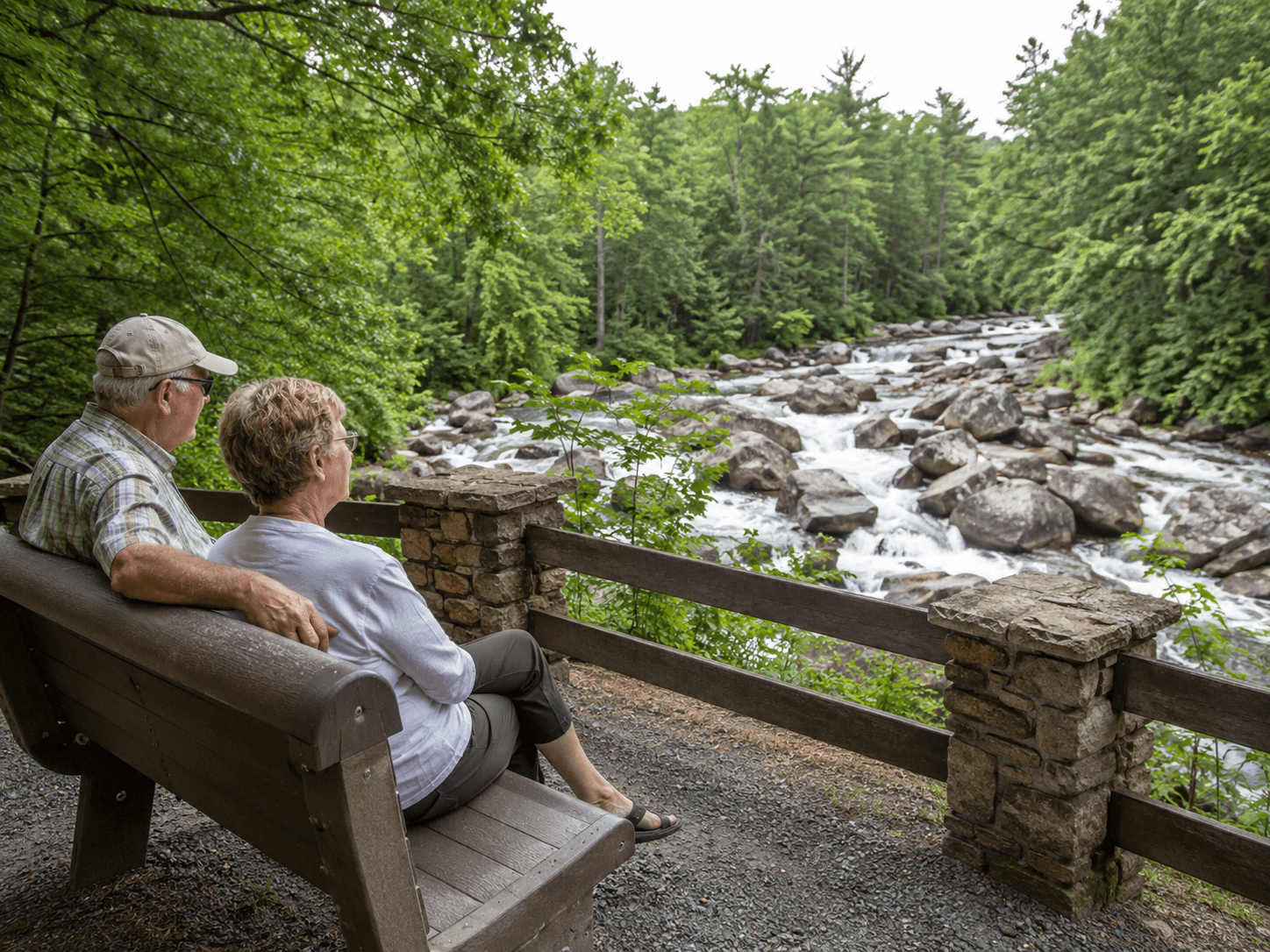
Maybe you’re traveling with young children.
Maybe Grandma and Grandpa are along.
Maybe your knees have informed you that a six-mile trail is no longer an appealing vacation activity.
Or maybe you simply want to see the Smokies without spending half the day climbing something.
Good news.
Great Smoky Mountains National Park is exceptionally well suited to sightseeing from the road and from easily reached stops. The National Park Service lists about 384 miles of roads available for auto touring, with experiences ranging from panoramic mountain views to streams, forests and historic buildings.
So put away the hiking boots if you want.
Here are 12 ways to experience the Smokies without taking a hike.
- Drive Newfound Gap Road
If this is your first visit, start here.
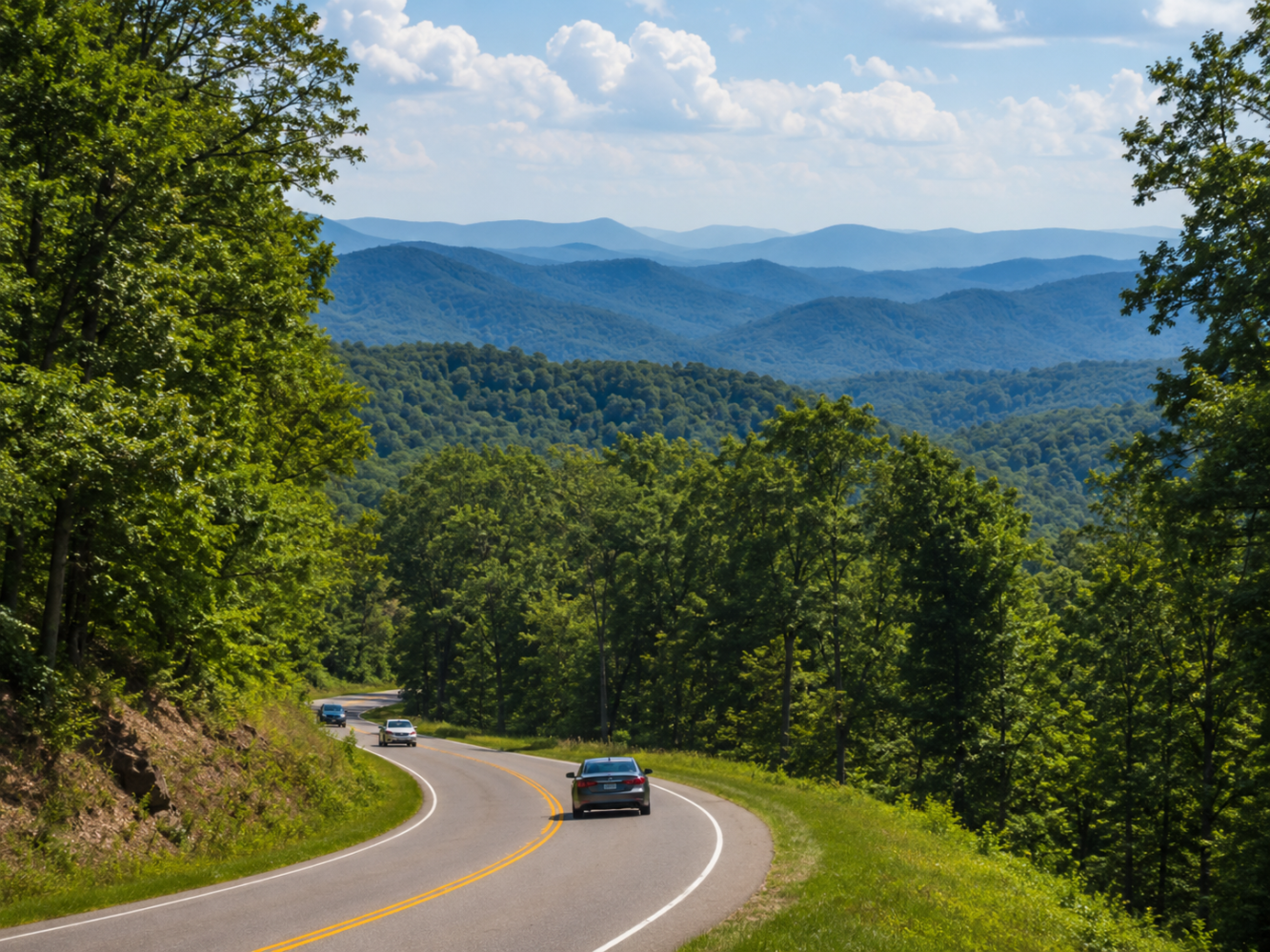
Newfound Gap Road crosses the Smokies between Gatlinburg and Cherokee and gives you that classic mountain experience: changing forests, winding roads, misty valleys and overlooks that make everyone reach for a camera.
Primary roads including Newfound Gap Road are generally open year-round, weather permitting.
The best part?
You don’t need to walk miles to see something beautiful.
Sometimes you simply need to pull over.
- Spend Time at Newfound Gap
Don’t make Newfound Gap one of those places where you stop for thirty-seven seconds, take a photograph and announce:
“Okay. What’s next?”
Get out.
Look around.
Let the mountains do their thing.
This is exactly why I like sightseeing without a packed schedule. You can spend ten minutes at an overlook—or forty—because nobody is waiting for you to reach mile marker six on a trail.
- Drive Cades Cove
Cades Cove gives you a completely different view of the Smokies.
Instead of standing high above the mountains, you’re traveling through a broad valley surrounded by them.
The 11-mile one-way loop combines mountain scenery, historic structures and opportunities to see wildlife. The road is generally open sunrise to sunset but is closed to motor vehicles on Wednesdays during the seasonal vehicle-free period, typically May through September.
My advice?
Don’t rush Cades Cove.
Eleven miles does not mean eleven quick miles.
Cades Cove operates on Cades Cove time.
Accept that before you enter the loop.
- Explore Roaring Fork Motor Nature Trail
If Cades Cove feels open and expansive, Roaring Fork feels intimate.
Forest.
Streams.
Historic structures.
A narrower mountain road winding through it all.
The National Park Service specifically lists Roaring Fork as a scenic-driving alternative with opportunities to explore historic structures.
This is one of my favorite choices for visitors who want a sense of old Appalachian mountain life without committing to a long hike.
- Visit a Visitor Center
Visitor centers are not simply places to use the restroom and grab a map.
Although both of those things are useful.
Sugarlands, Oconaluftee and Cades Cove can help you understand what you’re seeing rather than simply driving past it. Park staff can answer questions, and visitors can obtain maps and guides.
For first-time visitors, I especially like Sugarlands on the Tennessee side.
Walk in and ask:
“We have three hours and don’t want to hike. What would you recommend today?”
That’s a very useful conversation.
- See Historic Mountain Buildings
The park preserves more than 90 historic structures, reminders that these mountains were home long before they became a national park.
You’ll find cabins, churches, barns, mills and farm buildings in various areas.
Cades Cove’s Cable Mill Historic Area is a particularly good example, while the Mountain Farm Museum beside Oconaluftee Visitor Center provides another way to experience Appalachian history with relatively little walking.
The mountains become more interesting when you begin seeing the people who once lived among them.
- Follow Little River Road
Want mountains without climbing toward the highest elevations?
Try a river.
The National Park Service specifically recommends Little River Road as a scenic-drive option along the water.
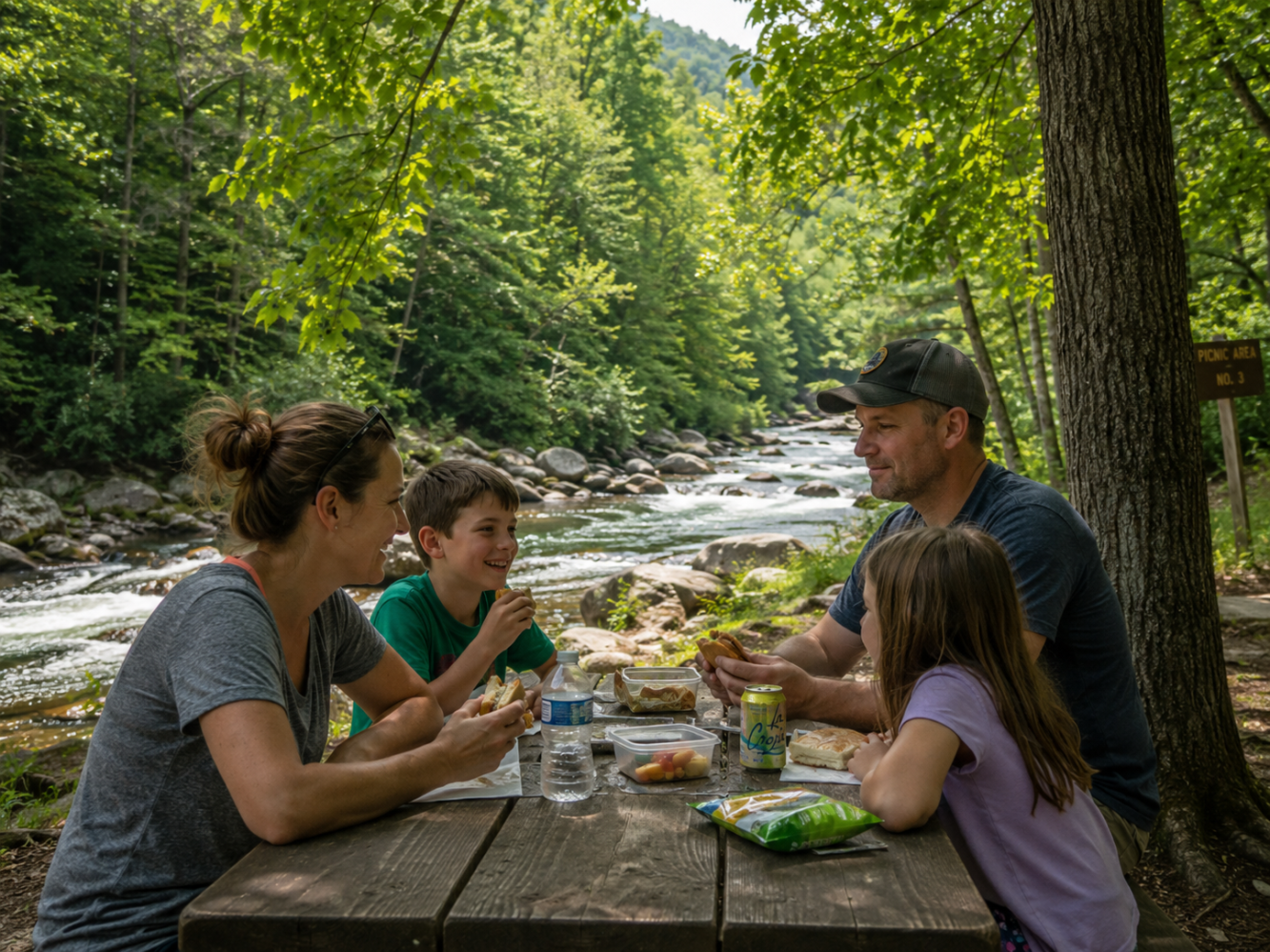
There are few things more Smokies than a road curving alongside a rocky mountain stream beneath dense Appalachian forest.
Roll down the window when it’s safe.
That’s your soundtrack.
- Stop Beside a Mountain Stream
You don’t have to hike to a waterfall to enjoy mountain water.
Find an appropriate roadside or picnic-area stop and simply spend a little time near the stream.
Just treat the water with respect. NPS warns that park streams and waterfalls can present serious hazards and does not recommend water recreation because of dangerous currents, slippery rocks and other risks.
In other words:
Enjoy the stream.
You do not have to prove anything by climbing onto the slickest rock you can find.
- Have a Picnic
This may be one of the most underrated national-park activities.
Bring sandwiches.
Fruit.
Drinks.
Something sweet.
Find a picnic table.
Eat lunch surrounded by the Smokies instead of spending another hour driving back into town.
The park maintains ten picnic areas, and Cades Cove, Deep Creek, Greenbrier and Metcalf Bottoms are among those currently open year-round.
Metcalf Bottoms is especially appealing because it sits along the Little River.
Sometimes lunch beside a river beats another attraction.
- Watch for Wildlife From a Safe Distance
You might see:
Black bears.
Deer.
Wild turkey.
Elk on the North Carolina side.
Or absolutely nothing.
Wildlife does not accept reservations.
If you do see animals, enjoy them responsibly. Current NPS guidance requires visitors to remain at least 50 yards from bears and 25 yards from elk, and visitors should use designated pullouts rather than stopping in the road.
Use the zoom on your camera.
That’s why it exists.
- Visit Oconaluftee
If your day takes you across Newfound Gap Road toward Cherokee, don’t automatically turn around at the state line.
Oconaluftee is one of the park’s most interesting non-hiking destinations.
You’ll find a visitor center, the Mountain Farm Museum, river-valley scenery and one of the park’s primary elk areas. Elk are often seen around the Oconaluftee area, particularly in open areas.
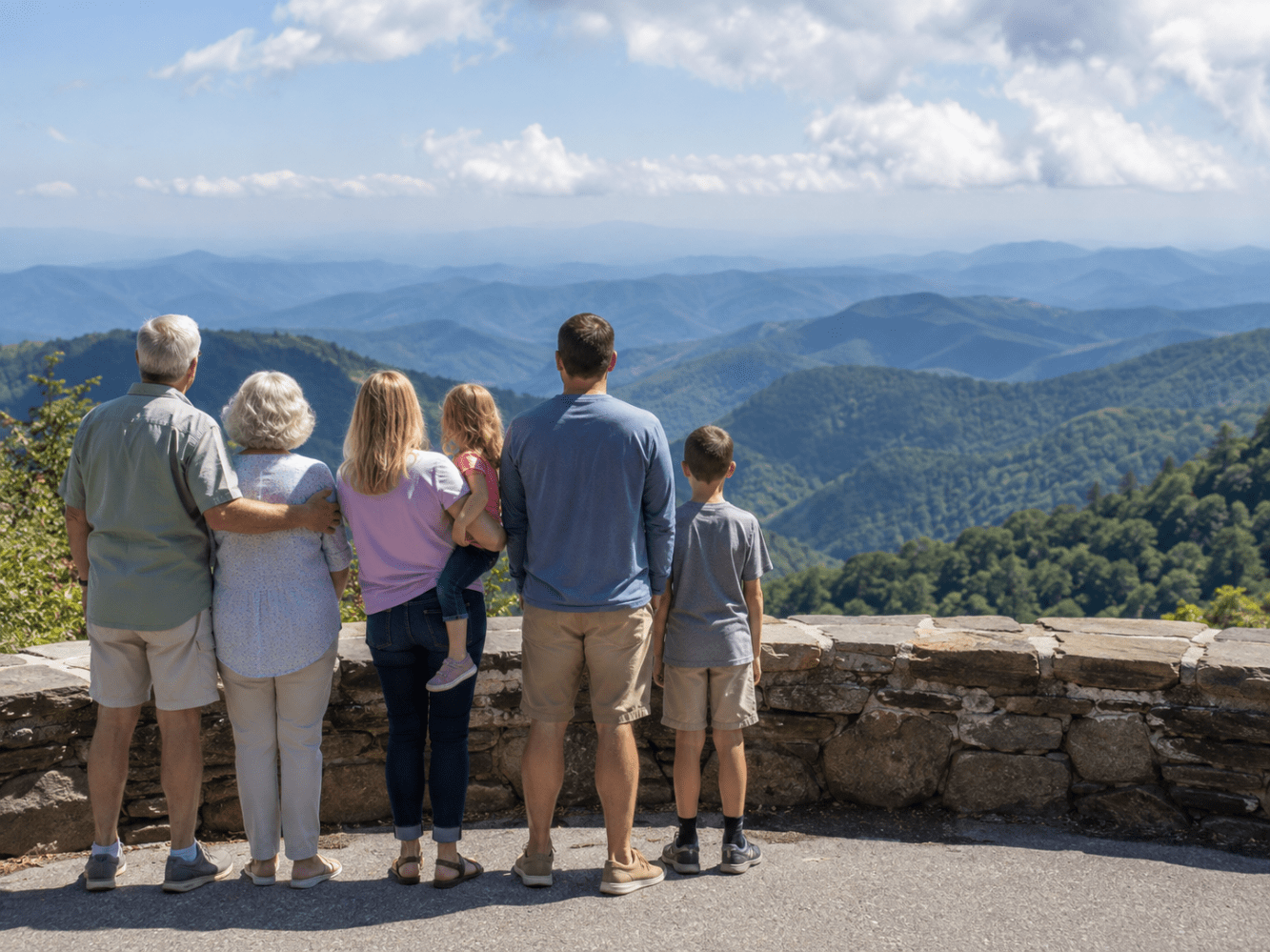
That makes it an excellent stop for families and multigenerational groups.
- Take a Guided Sightseeing Tour
Sometimes the easiest way to experience the mountains without hiking is also the simplest:
Let somebody else drive.
That solves a problem people don’t think about until they’re already here.
One person in the family usually spends the scenic drive watching:
The road.
The curves.
Traffic.
Directions.
Everyone else gets the view.
Smoky Mountains Jeep Tours currently offers guided sightseeing experiences including Newfound Gap, the Roaring Fork area and Foothills Parkway, with options designed around scenery, mountain history and sightseeing.
For families with different ages and physical abilities, guided sightseeing also gives everybody a chance to share the same experience.
Nobody has to stay behind because they can’t hike five miles.
And I think that’s important.
A Great Smokies Day Without Hiking
If I were planning one, I’d keep it simple:
Morning: Newfound Gap or guided sightseeing.
Lunch: Picnic beside the Little River.
Afternoon: Visitor center, historic buildings or Roaring Fork.
Late Afternoon: One last overlook.
That’s a very good national-park day.
No hiking mileage required.
One practical reminder: Great Smoky Mountains National Park does not charge an entrance fee, but vehicles parked for longer than 15 minutes generally require a parking tag. Current tags are $5 daily, $15 weekly and $40 annually.
And always check current conditions before you head into the park, since road and facility status can change.
You Don’t Have to Climb a Mountain to Experience One
That’s what I want non-hikers to take away from this.
You can:
Drive through the forest.
Stand at an overlook.
Hear a mountain stream.
See a cabin that’s been standing for generations.
Have lunch beside a river.
Watch mist move between ridges.
See wildlife from a safe distance.
Listen to a guide tell you why a place matters.
And go back to your cabin thinking:
“That was the Smokies.”
Because it was.
The park doesn’t require you to earn the view.
Sometimes all you have to do is stop long enough to look.