
WHAT TO SEE IN GREAT SMOKY MOUNTAINS NATIONAL PARK ON YOUR FIRST VISIT
The first thing you need to know about visiting Great Smoky Mountains National Park is this:
You’re not going to see all of it.
Not today.
Not this weekend.
Probably not during a week-long vacation.
And that’s perfectly fine.
One of the easiest ways to make a first visit stressful is to pull up a list of everything there is to see and start treating the national park like a checklist.
Cades Cove.
Newfound Gap.
Roaring Fork.
Streams.
Historic cabins.
Wildlife.
Overlooks.
Visitor centers.
Waterfalls.
Scenic roads.
Suddenly you’re spending more time watching the clock than looking at the mountains.
For your first visit, I would do something much simpler.
Choose a few experiences that show you what makes the Smokies special.
You can come back for the rest.
- Start at Sugarlands Visitor Center
If you’re entering the national park from the Gatlinburg side and you’ve never been here before, Sugarlands Visitor Center is a very practical first stop.
You can talk with park staff, pick up information, get oriented and find out if anything has changed that might affect the day’s plans. Great Smoky Mountains National Park has several visitor centers, including Sugarlands, Cades Cove and Oconaluftee, each serving a different part of the park experience.
I especially like a visitor center on a first trip because it gives you a chance to ask:
“We have four hours. What makes sense today?”
That’s a much better question than assuming you can fit everything you’ve bookmarked into four hours.
- Drive Newfound Gap Road
If someone told me:
“I’ve never been to Great Smoky Mountains National Park. Show me a classic Smokies experience.”
Newfound Gap would be high on my list.
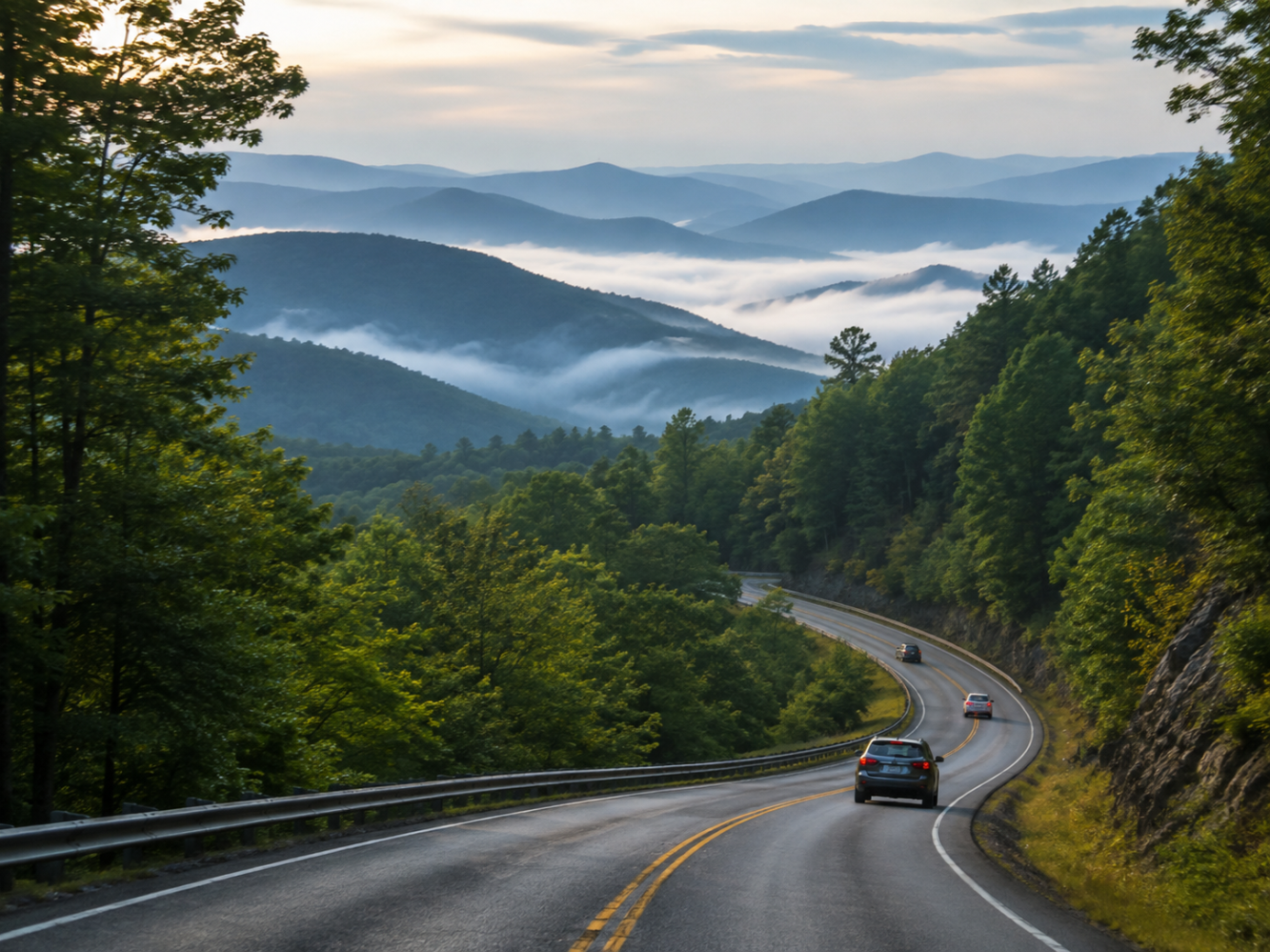
Newfound Gap Road is one of the park’s primary roads and is generally open year-round, weather permitting. It travels through changing elevations and forests while providing access to mountain views and overlooks.
This is where first-time visitors begin to understand the layers of the Smokies.
Mountain behind mountain.
Mist sitting in the valleys.
Forest changing as you climb.
Views that make everyone in the vehicle say:
“Look at that.”
Which creates one small problem.
The driver is supposed to be watching the road.
We’ll come back to that.
- Experience Cades Cove—but Give It Time
Cades Cove belongs on almost every first-time visitor’s list.
But I don’t necessarily mean it belongs on the same day as everything else.
Cades Cove is an 11-mile, one-way scenic loop through a broad mountain valley with historic structures, wildlife-viewing opportunities and access to trails.
And 11 miles can sound deceptively quick.
It isn’t a road I’d drive while saying:
“We need to be somewhere else in forty-five minutes.”
Wildlife can slow traffic.
You may want to stop.
You may want to explore a historic structure.
And the entire point is to enjoy the valley rather than race around it.
One important seasonal detail: in 2026, Cades Cove Loop Road is closed to motor vehicles on Wednesdays from May 6 through September 30 for vehicle-free days.
So check before you go.
- See the Forest, Streams and History Around Roaring Fork
Cades Cove isn’t the only place where the Smokies’ human history becomes part of the scenery.
The Roaring Fork area offers a much more intimate mountain experience—forest, rushing water, historic atmosphere and a narrower road that feels very different from the open valley of Cades Cove.
This is one reason I wouldn’t tell first-time visitors:
“You’ve seen one scenic drive, you’ve seen them all.”
You haven’t.
Roaring Fork and Cades Cove don’t feel alike.
And that’s part of what makes the park interesting.
Roaring Fork Motor Nature Trail is also one of the secondary roads where larger vehicles such as trailers, RVs and buses are prohibited, so visitors should understand the road they’re choosing before starting out.
- Stop at an Overlook and Actually Get Out
This sounds obvious.
Yet I’ve watched vacations become one continuous drive.
Everybody looks through the windshield.
Someone takes a picture through the window.
Then:
“Okay, what’s next?”
Stop.
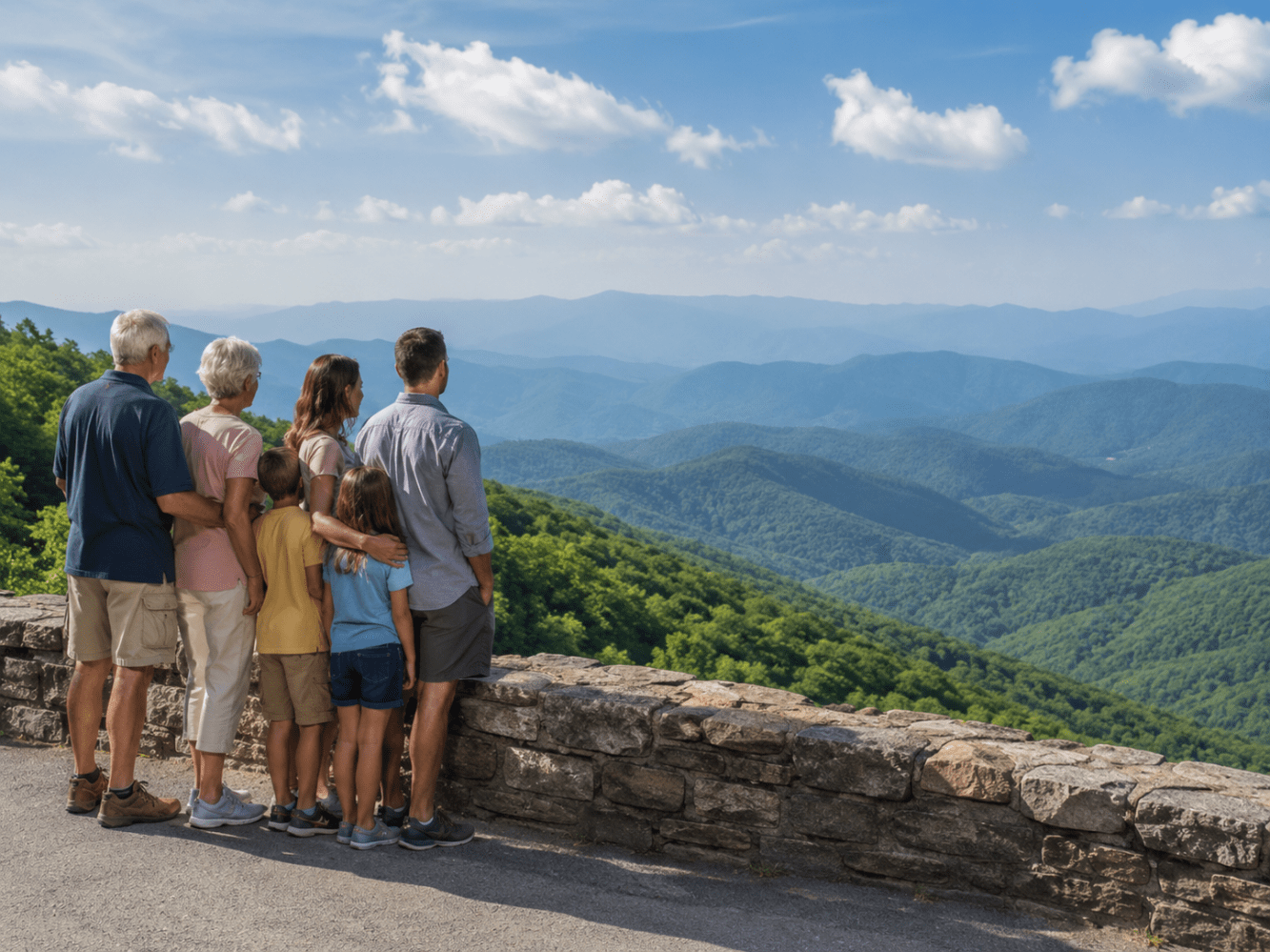
Use a legitimate pullout or overlook.
Get out.
Stand there.
Look at the layers of mountains.
Listen.
Take the family picture.
Let the kids look around.
You don’t need to turn every overlook into a twenty-minute photo shoot.
But give yourself enough time to realize where you are.
The park has hundreds of miles of roads available for auto touring, and average travel speeds on many paved park roads are around 35 mph—another reason to think of mountain sightseeing in time, not simply mileage.
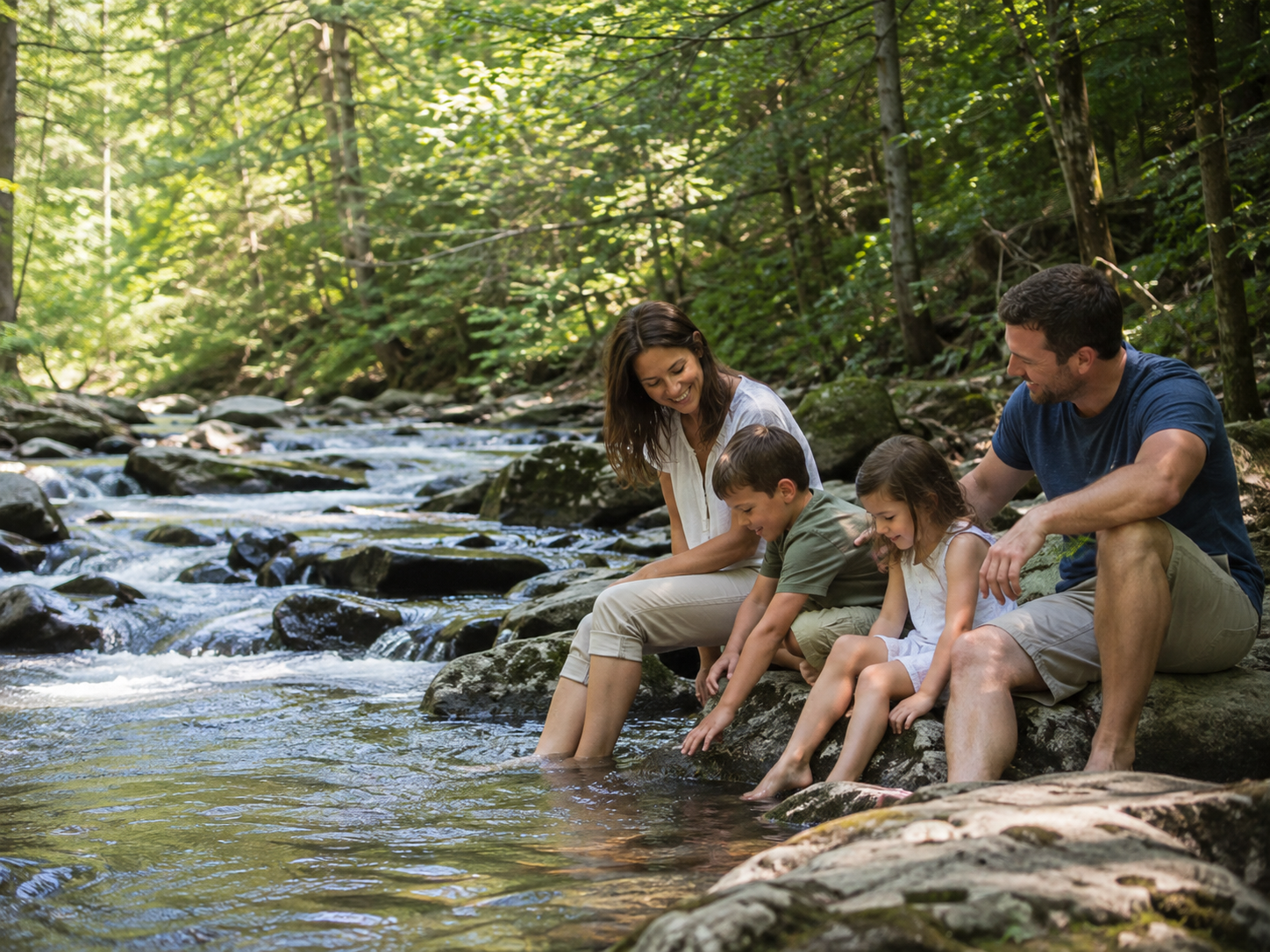
- Find a Mountain Stream
One of my favorite Smoky Mountains experiences doesn’t require a summit, admission ticket or major attraction.
Find somewhere appropriate to enjoy the water.
The Smokies are full of rocky streams that sound exactly like you hope a mountain stream will sound.
Sometimes people arrive convinced they need to be doing something.
Hiking.
Driving.
Photographing.
Checking off another stop.
You don’t.
Sometimes you can simply sit for a while.
For families with children or grandparents—and for anyone who doesn’t want a strenuous hiking vacation—these quiet moments can become some of the best parts of the trip.
- Look for the History, Not Just the Scenery
Great Smoky Mountains National Park isn’t only a landscape.
People lived here.
Farmed here.
Raised families here.
Built churches, mills, barns and homes here.
Cades Cove Visitor Center, for example, includes exhibits on Southern mountain life along with nearby historic structures and a working gristmill that operates seasonally.
When you stop seeing old cabins as simply “something pretty for a picture” and start thinking about the people who lived in these mountains, the park becomes much more interesting.
This is also where a knowledgeable guide can add so much.
A beautiful place becomes a story.
- Watch for Wildlife—but Don’t Chase It
Yes, there are black bears in the Smokies.
You may also see deer, wild turkey and other wildlife.
But wildlife is not operating on your vacation itinerary.
You cannot schedule:
10:15 — Bear.
And if you see one, enjoy the experience safely.
Don’t stop in the traffic lane.
Don’t approach the animal.
Don’t turn a wildlife sighting into a crowd-control problem.
You came into their environment.
Give them space.
- You Do Not Have to Hike to Have a Great First Visit
I want to emphasize this because some visitors assume that if they aren’t hikers, Great Smoky Mountains National Park isn’t really for them.
It absolutely can be.
The park offers extensive auto touring, scenic roads, overlooks, visitor centers, historic areas and roadside scenery. NPS lists roughly 384 miles of roads available for auto touring.
If you love hiking?
Wonderful.
We’ll have an entire group of articles for you.
But if you’re traveling with grandparents, young children or someone with physical limitations—or you simply don’t enjoy hiking—you can still have a memorable Smoky Mountains day.
- Don’t Forget the Parking Tag
The national park does not charge a general entrance fee, but vehicles parked for longer than 15 minutes generally need a parking tag.
That’s an important distinction.
Driving through?
Different issue.
Stopping and parking for sightseeing?
Check the parking-tag requirements.
And remember: a parking tag does not guarantee you a parking space.
Popular areas can still fill.
Handle the practical details before the trip so they don’t become the main memory of the trip.
If You Only Have Half a Day
For a first-time visitor with limited time, I would choose one major scenic experience.
For example:
Newfound Gap + overlooks + Sugarlands
or
Roaring Fork + Gatlinburg
or
a guided Smoky Mountains sightseeing tour.
Don’t attempt the entire park.
If You Have a Full Day
Now you have more room.
I might do:
Morning: Mountain sightseeing.
Lunch: Stop and relax.
Afternoon: Historic area, visitor center, stream or another scenic section.
Evening: Gatlinburg or back to the cabin.
Still not twelve destinations.
You’re seeing the park.
Not auditing it.
Check Conditions the Morning You Go
This should become part of every park day.
Mountain roads can be affected by weather, construction, maintenance and temporary closures. NPS maintains current conditions and seasonal-road information specifically so visitors can check before starting out.
Check that morning.
Not when you created the itinerary three months earlier.
The mountains have been known to change their minds.
One of the Best Ways to Experience Your First Visit? Let Someone Else Drive
For first-time visitors, this is where a guided Jeep tour makes sense naturally rather than feeling like an advertisement inserted into the article.
Smoky Mountains Jeep Tours currently offers guided experiences including Newfound Gap, the Roaring Fork area and Foothills Parkway, with tours designed around mountain scenery, history and sightseeing.
Somebody else worries about:
The road.
The curves.
Where you’re going.
Where to stop.
Meanwhile, you get to look around.
Ask questions.
Take pictures.
And hear why what you’re seeing matters.
For a first visit, that can be particularly valuable.
Because your first Smoky Mountains trip shouldn’t be spent worrying about whether you took the correct turn.
It should be spent thinking:
“Now I understand why people keep coming back.”